Text and endpoint frames
Start from a prompt alone, or lock the opening and ending composition with first and last images.
Wan 3.0 Video in Omnipix
Create cinematic video from text, images, video, audio, documents, or public web pages. Wan 3.0 keeps the references in one coherent sequence and generates native sound with the picture.
2–30
seconds
10 + 5 + 5
images · video · audio
Native
synchronized sound
Reference-guided generation
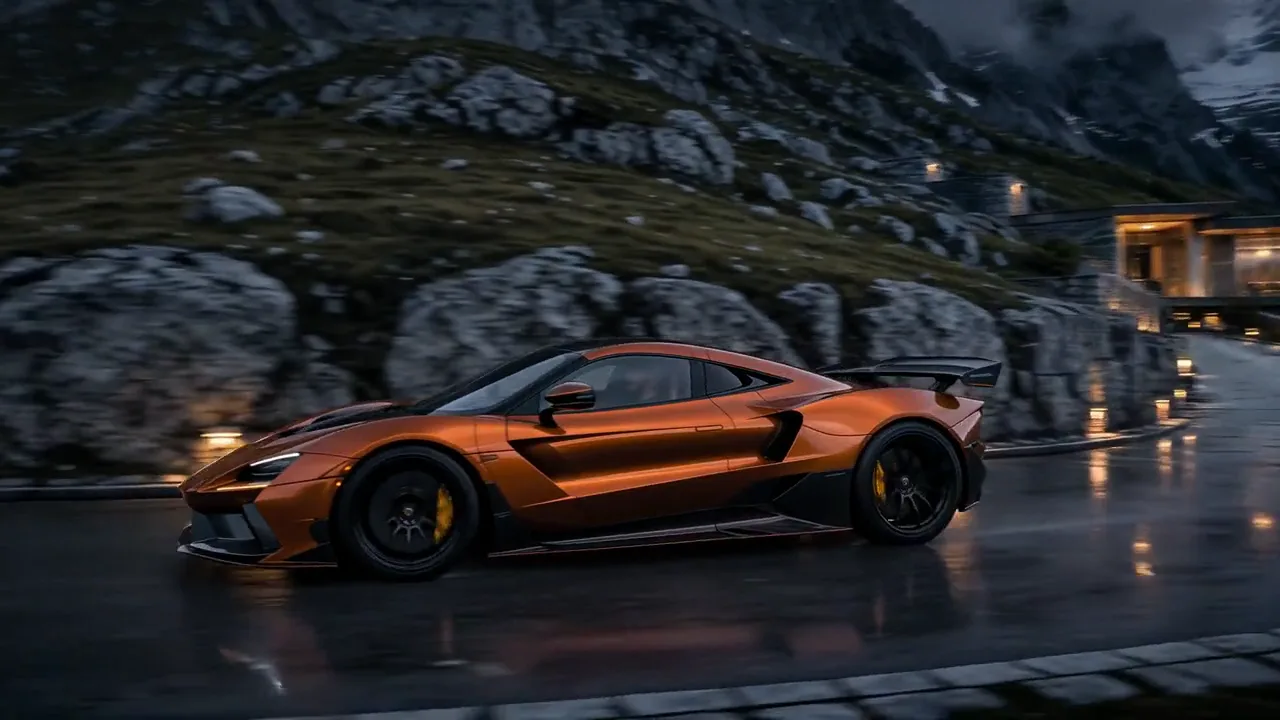
Four visual references establish the hypercar, villa, mountain road, and atmosphere. Wan 3.0 turns them into one continuous 15-second sequence with camera movement and synchronized sound.
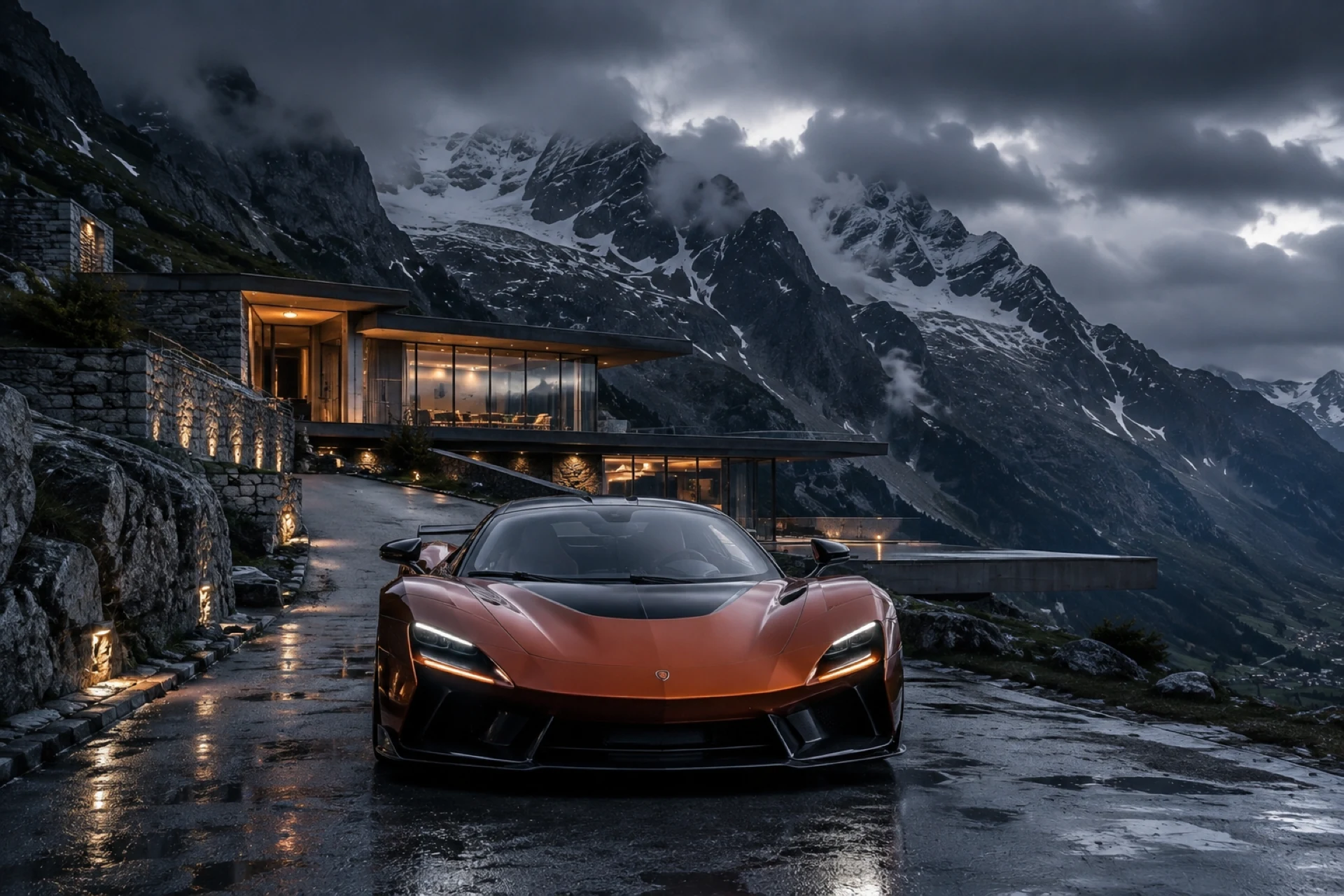
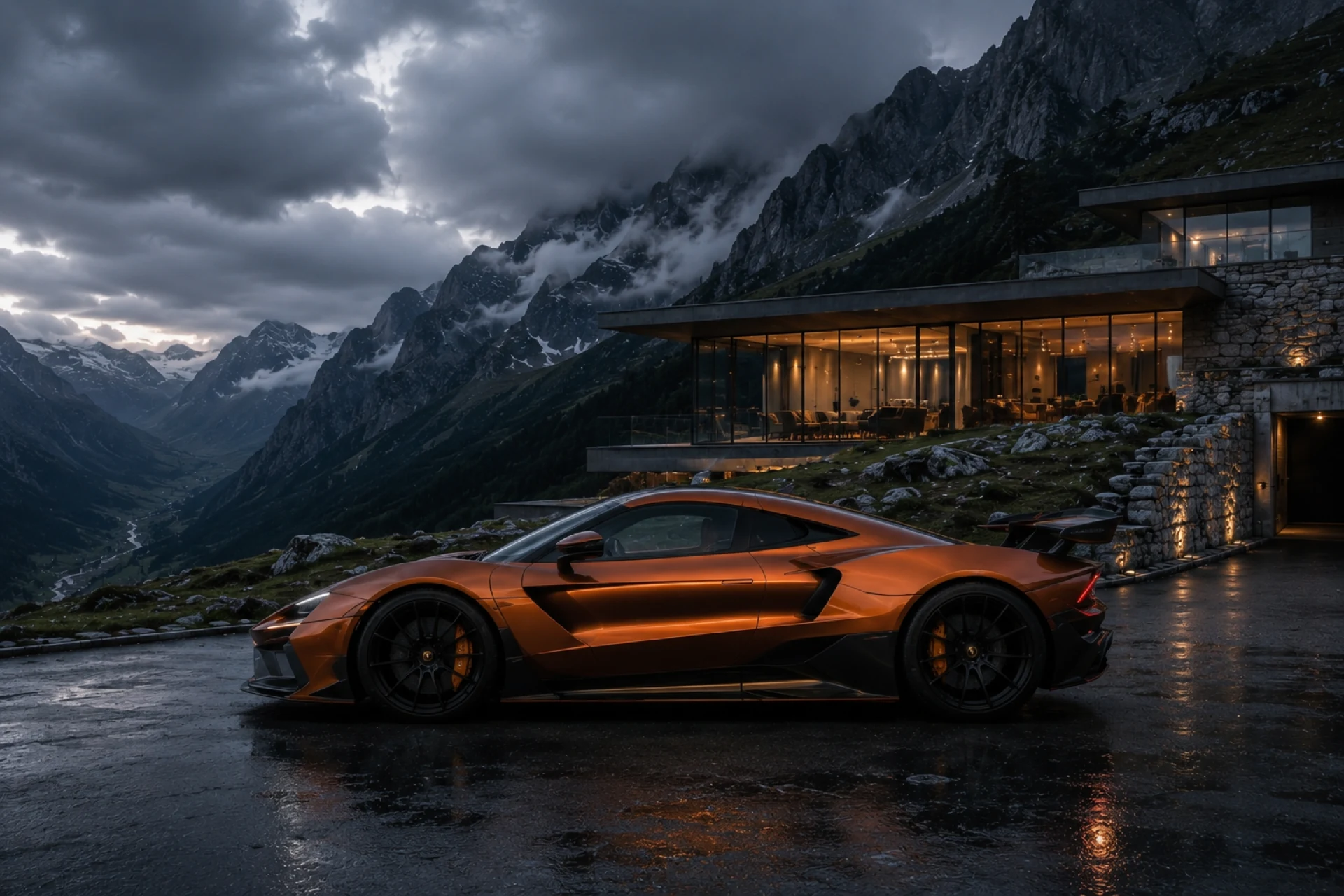
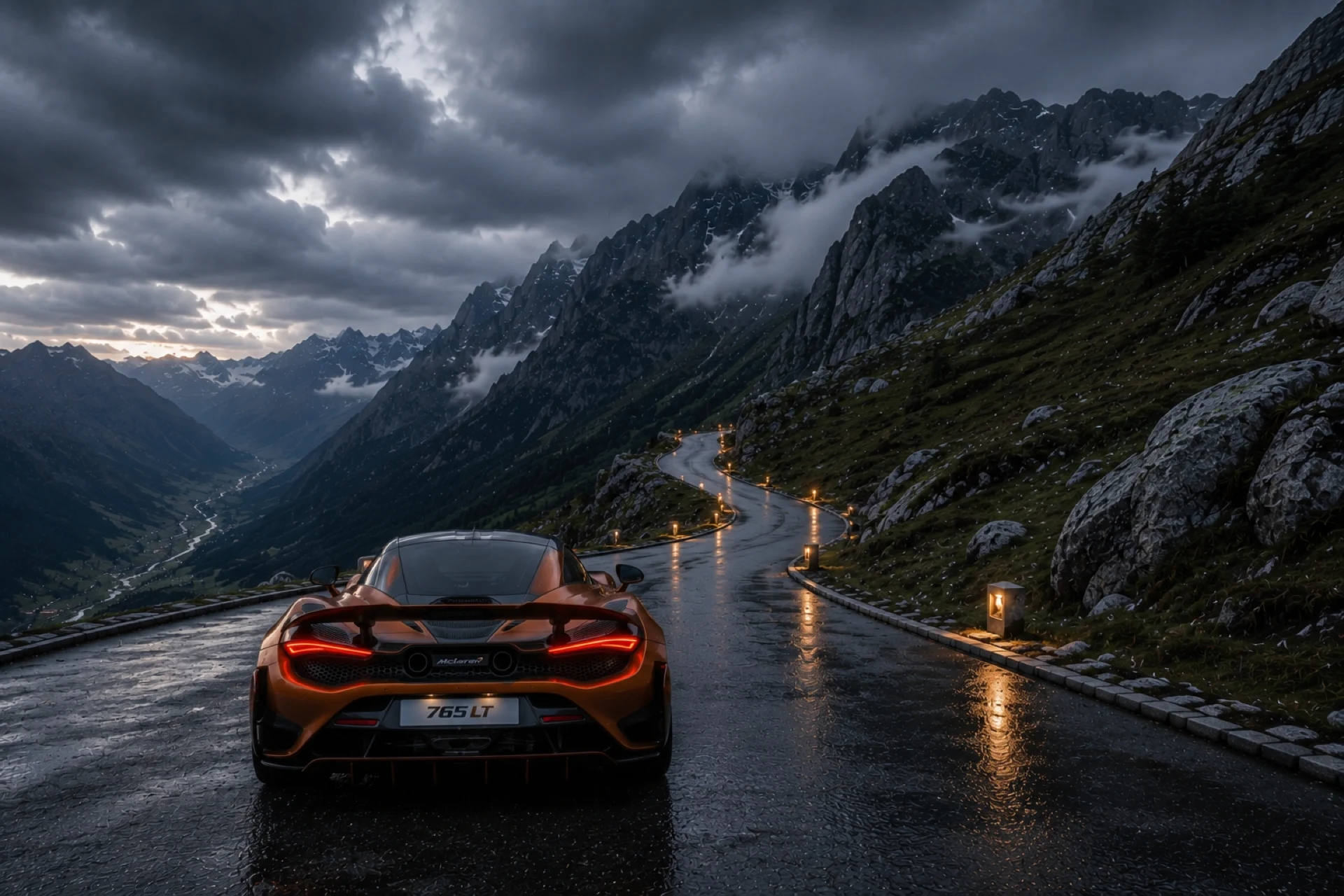
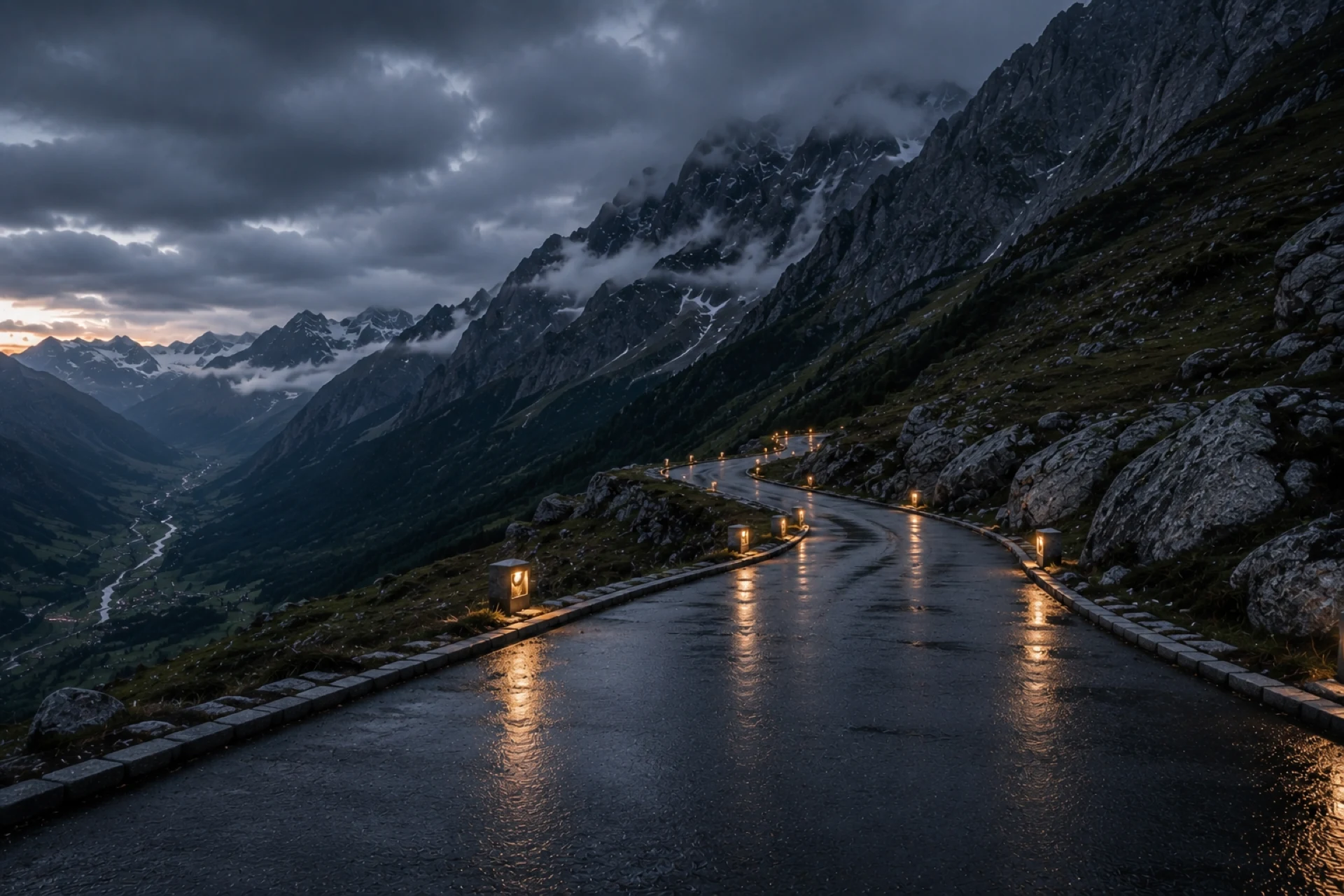
Use the four reference images as consistent views of the same vehicle and the same Alpine location. Begin exactly from Image1: the metallic copper-orange hypercar faces the camera on the wet mountain road, with the illuminated high-tech villa behind it. Preserve the exact car design, color, proportions, wheels, bodywork, lighting, road, mountain geography, weather, and architecture established by the references. The camera is mounted on a cinematic drone positioned low and close in front of the vehicle. The car remains still for only a brief establishing moment, then begins moving forward smoothly. As the car starts driving, the drone simultaneously begins a smooth counterclockwise orbit around it. The camera moves from the frontal perspective toward the car’s side, matching Image2 naturally as the vehicle continues moving. The orbit must happen around a moving vehicle rather than around a stationary car. The drone continues its counterclockwise movement until it transitions naturally behind the car, matching the rear-view depicted in Image3. At the same time, it gradually gains altitude and increases its distance slightly. Keep the vehicle clearly framed and visually locked as the background changes through natural parallax. The villa gradually disappears behind the camera. The geography now follows the opposite-direction landscape referenced in Image4: the steep rocky mountainside rises on the right, while the deep Alpine valley opens dramatically on the left. The wet serpentine road descends along the mountainside toward the valley between the peaks. There are no gates, buildings, or artificial structures ahead beyond the small roadside lights already established in the references. The drone now follows above and behind the hypercar as it descends the serpentine road. It continues climbing slowly, revealing progressively more of the road ahead, the immense valley on the left, the river far below, jagged mountains, patches of snow, drifting low clouds, and the stormy evening sky. For most of the sequence, the car drives at a controlled but brisk pace while the drone keeps it consistently visible. The drone makes subtle organic corrections in altitude, lateral position, yaw, and distance like a skilled human drone operator, rather than remaining mechanically attached to the vehicle. The car may move slightly around the frame as the drone searches for stronger compositions, but it remains the clear visual subject. Wet asphalt reflects the warm roadside lights and the car’s lighting. The wheels rotate naturally, the suspension responds subtly to the descending road and corners, and reflections from the dark mountains, clouds, road lights, and remaining twilight move continuously across the copper-orange bodywork. After this sustained tracking sequence, the car reaches a longer open section leading toward a pronounced road curve. The drone has now risen considerably higher and deliberately begins allowing more distance to open between itself and the vehicle. Only near the end, the hypercar suddenly accelerates with enormous force. The acceleration should feel dramatically stronger than everything that came before: the rear squats subtly under power, the vehicle rapidly gains speed, and its distance from the drone increases almost immediately. Do not have the drone accelerate to catch up. The hypercar becomes progressively smaller as it rockets down the wet mountain road. Its red taillights streak subtly through the darkening landscape as it enters the distant curve at very high speed and disappears completely behind the mountainside. The drone continues moving forward and rising after the car has vanished, leaving the final view focused entirely on the empty serpentine road descending into the vast Alpine valley, with the valley on the left and the towering mountain slope on the right. Serious premium automotive cinematography, photorealistic, dramatic Alpine atmosphere, realistic vehicle physics, strong natural parallax, physically accurate wet-road reflections, natural wheel motion blur, subtle suspension movement, smooth stabilized drone flight with organic corrections, realistic cloud and mist movement, continuous coherent geography. One seamless continuous shot. No cuts, no teleporting camera, no sudden viewpoint changes, no drifting, no wheel sliding, no vehicle deformation, no changes to the car’s design or color, no invented buildings or gates along the road.
Long-form continuity
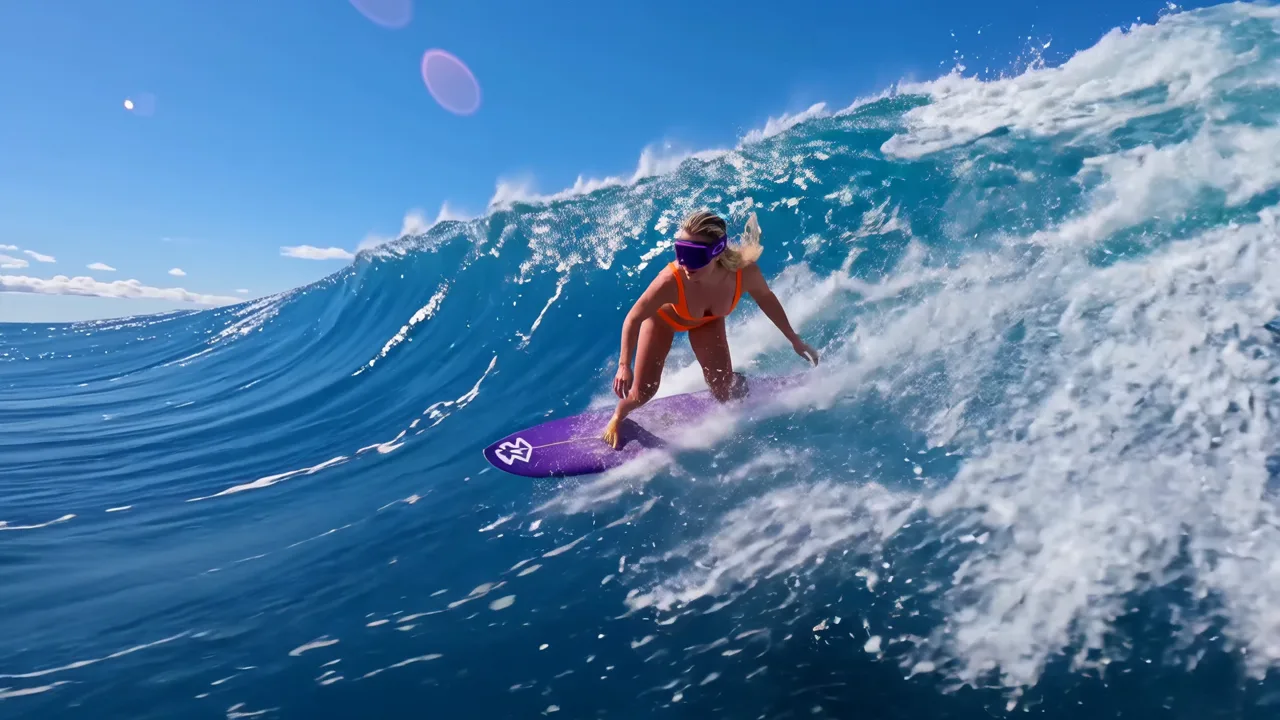
Two independent takes from the same ambitious prompt play as one continuous background sequence, showing how Wan sustains action across radically different environments.
A young woman, early-to-mid 20s, athletic build, fair skin with a light windburned flush on her cheeks, sharp focused eyes, platinum blonde hair loose to her shoulders, wears a bikini orange color hex EC4800 and deep violet-purple goggles and rides a matching deep violet-purple snowboard. A wide-angle low shot, mounted near the helicopter skid, looks out and up as she leaps left out of the open helicopter door, her hair whipping wildly in the wind. As she leaves the helicopter she performs a bold freestyle aerial trick, dynamic and expressive. The helicopter pulls away fast up and to the right, its dark frame and skid visible at the edge of frame as it climbs out of shot. The camera then cuts to a low tracking shot, following only the falling rider as she completes the trick and stabilizes; gravity kicks in hard, she drops fast toward the slope below, board tucked tight, her shoulder-length blonde hair whipping hard in the wind, no hang time. She lands hard on a steep untouched powder slope, knees absorbing the impact, and immediately turns her body sideways into a hard lateral carve, her loose blonde hair whipping sharply around her face with the wind and speed. She whips the board into a sharp sideways turn, the entire side edge of the board catching the snow at once as she twists into the carve; a wide wall of snow sprays up violently along the full length of the board's edge, the bikini orange color hex EC4800 and violet-purple goggles standing out sharply against the white powder, camera staying low and close, tracking fast alongside the spray as it builds, distant jagged peaks blurring into streaks from the speed. As the spray reaches its densest point, the white powder gradually darkens and thickens, curling like rising sea foam, then flattening into deep blue ocean water; the same woman, same face, her shoulder-length blonde hair now soaked and clinging to her neck and cheeks, the same bikini orange color hex EC4800 and same deep violet-purple goggles, is now crouched low as a surfer on a matching deep violet-purple surfboard. She rides forcefully into a powerful barreling wave, one hand trailing through the curling water wall, the camera holding the same low, fast tracking position, drone-style, following her directly into the barrel with no break in motion, her wet blonde hair whipping heavy with the speed of the ride. The barrel curls tighter and closes over her completely, the wave folding shut around the frame in a final wall of white water and spray, the screen filling entirely with churning foam and light as the wave collapses, ending the shot on the closing curtain of water. Rider identity — same face, same shoulder-length blonde hair, dry and windblown on snow, wet on water, same bikini orange color hex EC4800, same deep violet-purple goggles, same deep violet-purple board — stays fully consistent throughout, with only one cut, from the helicopter point of view to the tracking shot right after the jump, and no other scene breaks. Real diegetic sound plays underneath throughout — heavy helicopter rotor blades and engine roar fading as it pulls away, wind rushing hard past the rider during the fall, the sharp crunch and hiss of the snowboard landing and carving through powder, the rushing hiss of the snow spray, transitioning into the roar and crash of ocean waves and rushing water during the surf, ending in the deep muffled roar of water closing over the camera. On top of these real sounds, a driving high-energy drum and bass music track runs throughout, fast breakbeat rhythm, deep rolling bassline, building intensity that syncs with the carve and the barrel. No voiceover.
Omni-modal control
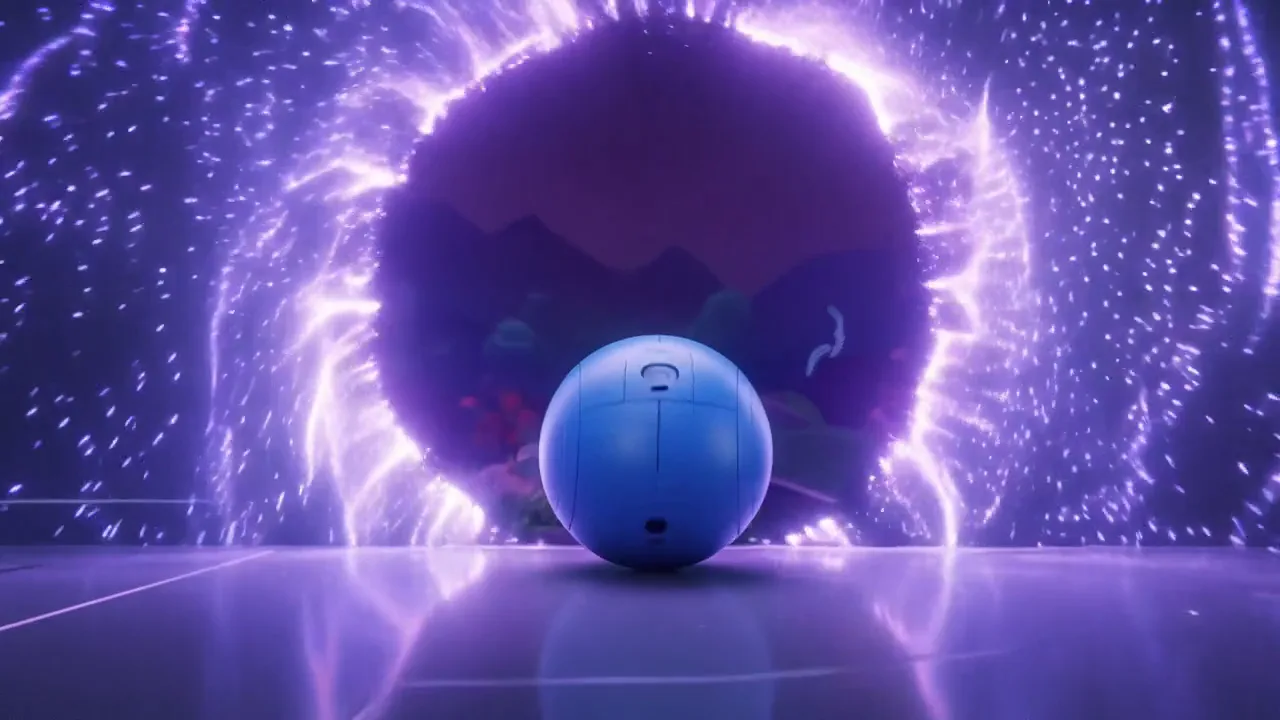
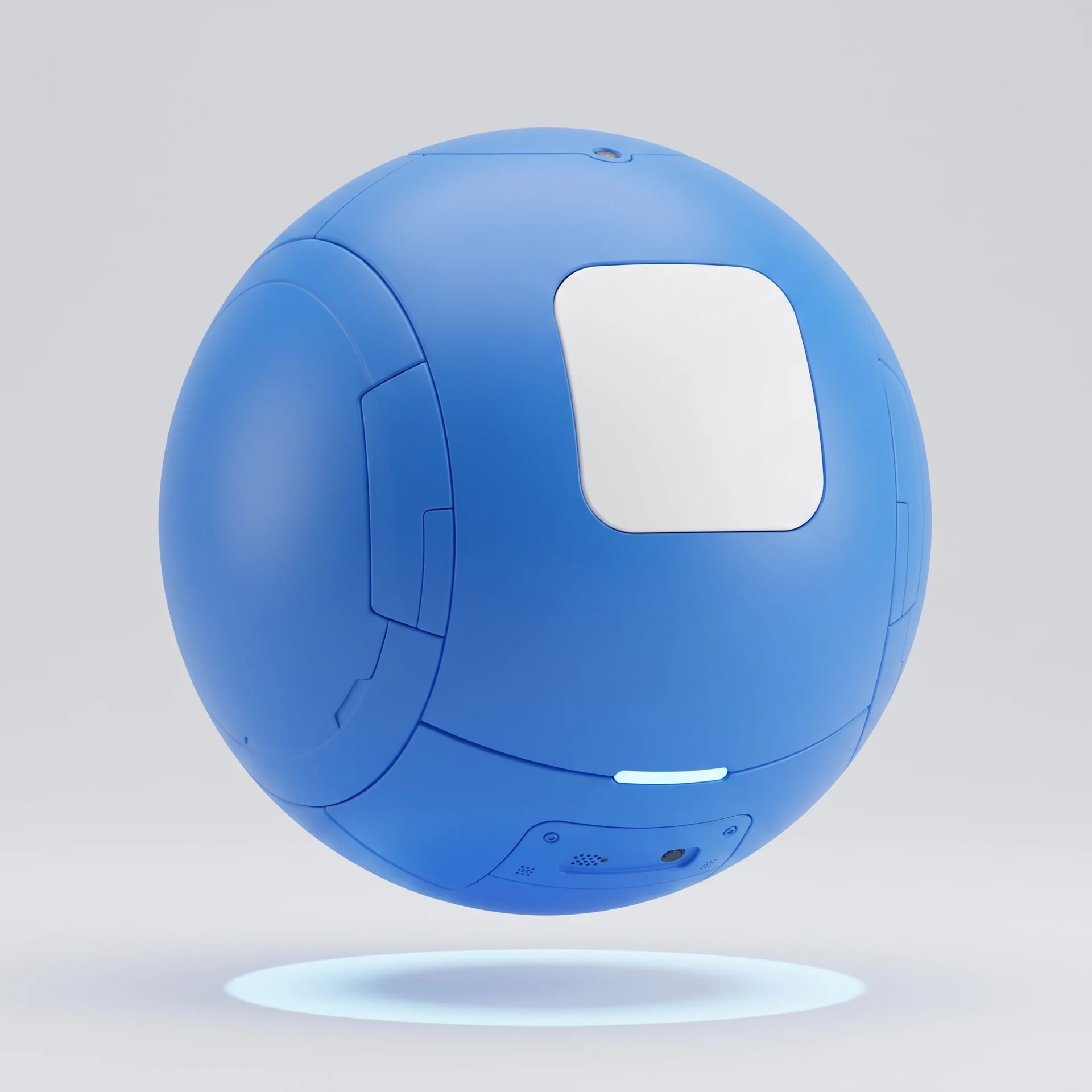
Use Image1, Image2, Video1, or Audio1 in the prompt to give every asset an explicit role. These examples show the actual input beside the generated output.
Input
Output
Use Image1 as the exact character reference. The compact blue spherical robot mascot levitates in a dark cinematic studio while four luminous creative elements orbit around it: an image frame, a moving film strip, an abstract audio waveform, and glowing lines representing a prompt without readable letters. The elements spiral inward and touch the mascot white rectangular side display, releasing a wave of blue and violet light that transforms the empty studio into a vivid living cinematic environment. Preserve the mascot exact spherical shape, blue body panels, white display, seams, and mechanical details. One continuous controlled camera move, premium product-film lighting, native futuristic sound design, no speech, no readable text, no logos, no additional characters. End with the mascot centered and clear space for interface copy.
One model, many starting points
Start from a prompt alone, or lock the opening and ending composition with first and last images.
Guide identity, style, movement, and atmosphere with up to ten images, five videos, and five audio files.
Use one supported document or public URL when the creative brief already lives outside the prompt.
Generate picture and sound together for clips from 2 to 30 seconds in adaptive or fixed framing.
Omnipix pricing
Wan 3.0 is billed per generated second. Choose the resolution that fits the job; there is no subscription commitment.
01
02
03
Minimum charge per generation: 50 credits.
How to create
Write the subject, action, camera movement, atmosphere, and timing you want.
Attach supported images, video, audio, a document, or a public page and name their roles in the prompt.
Set duration from 2 to 30 seconds, resolution, aspect ratio, and optional prompt enhancement.
Review the result in your gallery, download it, or use it as the source for the next creative step.
Questions
A text prompt, first and last frames, image, video, and audio references, or one supported document or public web page. Inputs can be combined within the limits shown in the workspace.
Choose any whole-second duration from 2 to 30 seconds. Longer clips cost more because Wan pricing is calculated per generated second and resolution.
Yes. Wan 3.0 can generate native synchronized audio and can also use uploaded audio as a creative reference.
It asks Wan to intelligently rewrite the prompt before generation. It is optional and stays off unless you enable it.
Give Wan 3.0 the direction and turn them into a scene with motion and sound.